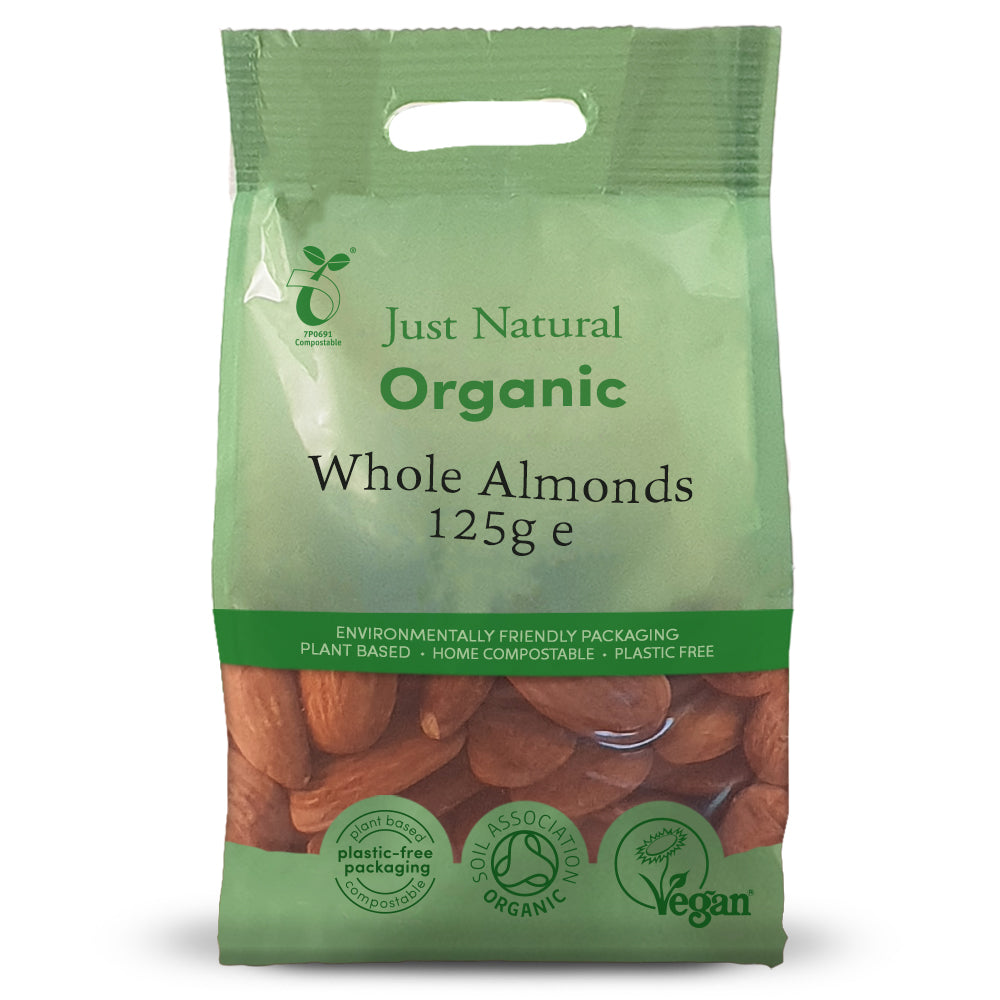
Organic Almonds Whole 125g/250g/500g
Organic Almonds Whole 125g/250g/500g


Couldn't load pickup availability
Almonds are the most widely consumed tree nut in the world — and with good reason. These certified organic whole almonds from Just Natural Organic are raw, skin-on kernels with a firm bite, mild sweetness, and one of the most comprehensive nutritional profiles of any nut. They are the richest nut source of Vitamin E (providing around 26mg per 100g — over 200% of the NRV), an outstanding source of calcium (264mg per 100g — 33% NRV, the highest of any nut), and provide significant magnesium, riboflavin (B2), phosphorus, and manganese.
The brown almond skin concentrates flavonoid antioxidants and prebiotic fibre that feeds beneficial gut bacteria. Almonds also provide the amino acid arginine, associated with cardiovascular health, and plant sterols linked to cholesterol management.
Certified organic by the Soil Association. Plastic-free, home-compostable packaging. Available in 125g, 250g and 500g.
Eat as a snack. Soak overnight for a softer texture and improved digestibility. Blend into homemade almond milk or almond butter. Use in baking — cakes, biscuits, and crumbles. Toast and scatter over salads, porridge, or rice dishes. Slice and use as a garnish for Indian and Middle Eastern dishes.
Recipe idea — Homemade Almond Milk: Soak 150g whole almonds in cold water overnight. Drain and rinse. Blend with 800ml cold water, a pinch of sea salt, and optionally 2 medjool dates and 1 tsp vanilla extract. Strain through a nut milk bag, squeezing thoroughly. Store in the fridge for up to 4 days. Creamier, fresher, and more flavourful than any carton — and the leftover almond pulp can be dried and used as almond flour.
| Nutritional Values per 100g | |
|---|---|
| Energy | 2536 kJ / 607 kcal |
| Fat | 52g |
| Of Which Saturates | 4g |
| Carbohydrates | 22g |
| Of Which Sugars | 4.8g |
| Fibre | 12g |
| Protein | 21g |
| Salt | 0g |
Key nutrients: Richest nut source of Vitamin E (>200% NRV), highest nut source of calcium (33% NRV), riboflavin (B2), magnesium, phosphorus, manganese, and prebiotic fibre from the almond skin. Also high in monounsaturated fats and plant sterols.
Ingredients: Organic Whole Almonds.
FAQs
Why are almonds so high in Vitamin E?
Almonds are the single richest whole-food source of Vitamin E, providing around 26mg per 100g — more than double the adult NRV. Vitamin E is a fat-soluble antioxidant that protects cell membranes, supports immune function, and maintains healthy skin. Almonds' high fat content makes them an ideal carrier for this fat-soluble vitamin.
Should I soak almonds before eating?
Soaking whole almonds overnight in cold water softens them, making them easier to digest and improving the bioavailability of some nutrients by reducing phytic acid content. Soaked almonds are particularly good for making almond milk and almond butter. For eating as a snack, raw is perfectly fine.
Are almonds a good source of calcium for dairy-free diets?
Yes — almonds provide around 264mg of calcium per 100g, making them the highest calcium nut. A 30g handful provides around 79mg of calcium — roughly 10% of the adult NRV. While absorption is somewhat lower than dairy calcium, almonds make a meaningful contribution alongside other plant calcium sources.
Are these gluten-free?
Yes — almonds are naturally gluten-free. Packed in a facility handling tree nuts, peanuts, sesame, and gluten-containing grains.
What is the difference between whole, ground, flaked, and blanched almonds?
Whole almonds are raw, skin-on kernels — most versatile and nutritious. Blanched almonds have had their skins removed. Flaked almonds are thin slices used in baking and garnishing. Ground almonds are a flour-like powder for baking. Each has different culinary uses but all start from the same nut.