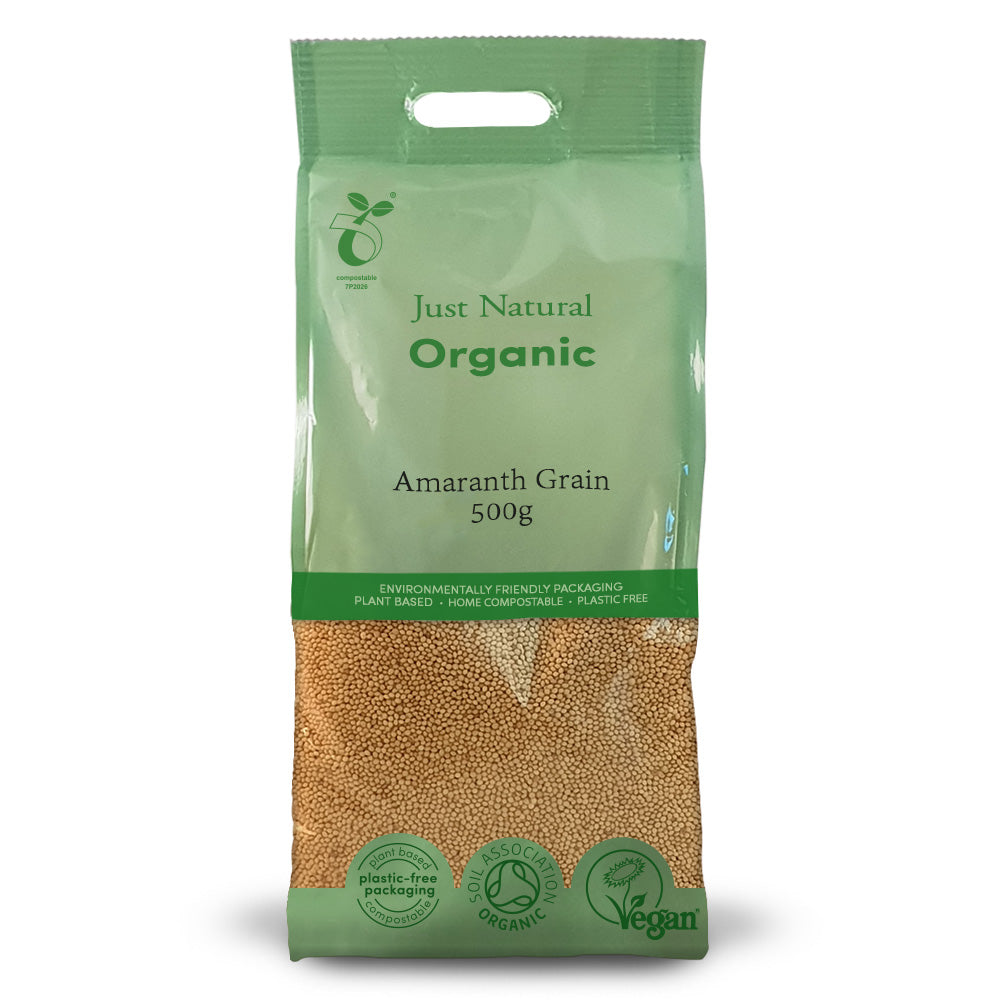
Organic Amaranth Grain 500g
Organic Amaranth Grain 500g


Couldn't load pickup availability
Amaranth is a tiny, golden pseudo-grain from South America — cultivated by the Aztecs for thousands of years before Spanish colonisation attempted to eradicate it (alongside its spiritual significance) in the 16th century. These certified organic amaranth grain from Just Natural Organic have a mild, slightly earthy, peppery flavour that becomes nutty when toasted, and cook to a creamy, porridge-like consistency — almost like very fine polenta.
Amaranth provides complete plant protein (14g/100g, including unusually high lysine content), manganese, magnesium, phosphorus, iron, and calcium. Naturally gluten-free. Also contains squalene — an antioxidant compound found in few other plant foods.
Certified organic by the Soil Association. Plastic-free, home-compostable packaging. Available in 500g.
Cook in a 1:3 ratio for 20 minutes, stirring often — it thickens to a creamy consistency. Use as a high-protein porridge. Mix cooked and cooled amaranth into energy balls or veggie burgers. Add raw to salads as a crunchy topping. Pop in a dry pan like miniature popcorn.
Recipe idea — Amaranth & Banana Breakfast Porridge: Bring 600ml oat milk to a simmer. Whisk in 200g amaranth grain with a pinch of salt. Cook on low heat, stirring frequently, for 20 minutes until thick and creamy. Stir in 1 tsp honey and ½ tsp cinnamon. Top with sliced banana, toasted pumpkin seeds, and a drizzle of almond butter. A complete-protein, gluten-free breakfast with calcium, iron, and magnesium — far more nutritious than standard porridge.
| Nutritional Values per 100g (dry) | |
|---|---|
| Energy | 1569 kJ / 371 kcal |
| Fat | 7.0g |
| Of Which Saturates | 1.7g |
| Carbohydrates | 65g |
| Of Which Sugars | 1.7g |
| Fibre | 7g |
| Protein | 14g |
| Salt | 0g |
Key nutrients: Complete plant protein (14g/100g, high lysine), manganese, magnesium, phosphorus, iron, calcium, and squalene (rare plant antioxidant). Naturally gluten-free.
Ingredients: Organic Amaranth Grain.
FAQs
What makes amaranth protein special?
Amaranth contains all essential amino acids, with particularly high lysine content — an amino acid that most grains are deficient in. The protein quality (biological value) of amaranth is among the highest of all plant foods, comparable to animal protein sources in amino acid completeness.
Can amaranth be popped?
Yes — amaranth pops wonderfully in a dry pan. Heat a heavy pan over high heat until very hot. Add 1 tbsp of dry amaranth, cover, and shake constantly for 10–15 seconds until it pops (the window is very short — remove immediately once popping begins). The popped grains can be scattered over porridge, yoghurt, or mixed with honey for a crunchy topping.
Is amaranth gluten-free?
Yes — amaranth is naturally gluten-free, despite its grain-like culinary use.
What is the historical significance of amaranth?
Amaranth was a sacred food for the Aztec civilisation — used in religious ceremonies alongside its role as a staple crop. When the Spanish conquered Mexico in the 16th century, they banned amaranth cultivation as part of an effort to eliminate indigenous religious practices. The grain was preserved by small communities and has only regained widespread cultivation in recent decades.