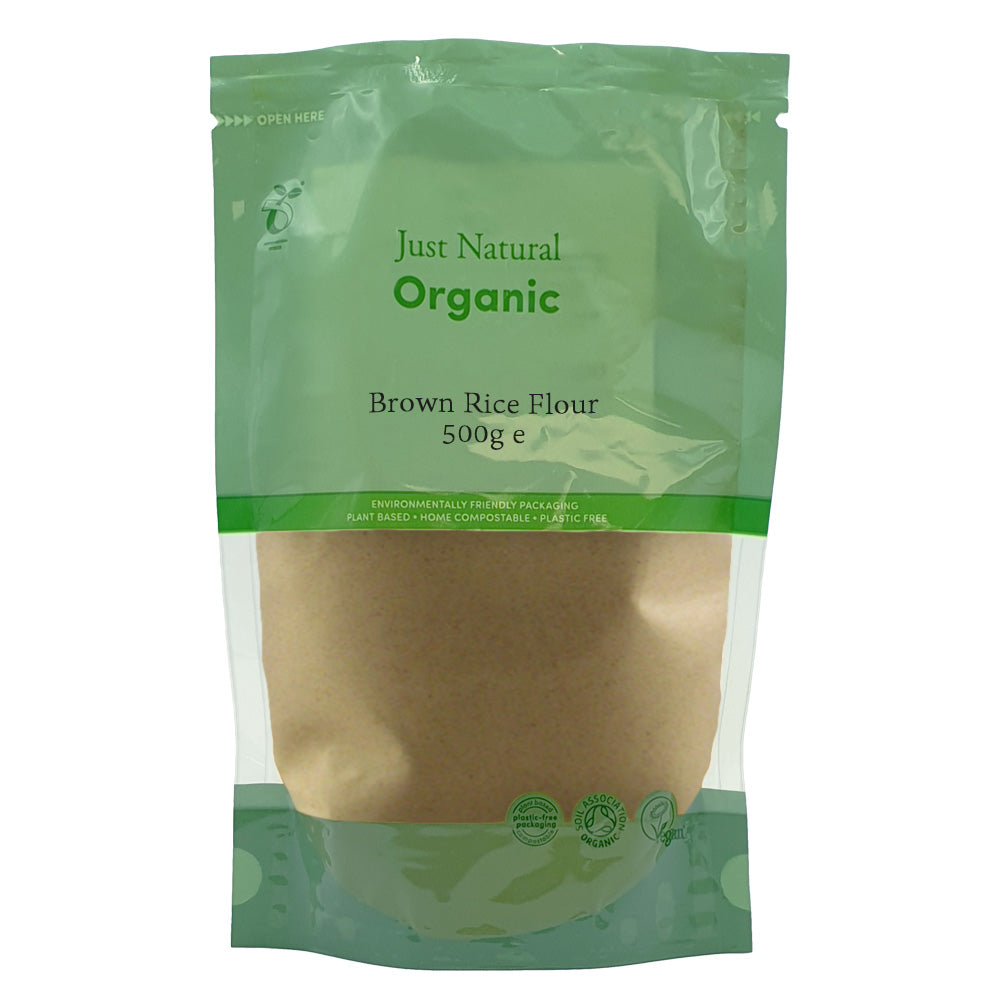
Organic Basmati White Rice 500g/1000g
Organic Basmati White Rice 500g/1000g


Couldn't load pickup availability
White basmati rice is the world's most prized long-grain rice — grown in the foothills of the Himalayas and recognised globally for its extraordinary fragrance, length, and the way it separates perfectly into individual grains when cooked. These certified organic white basmati grains from Just Natural Organic are aged to enhance their characteristic aroma and elongation during cooking — a defining quality marker for premium basmati.
White basmati has a naturally low-to-medium glycaemic index compared to other white rices, attributed to its amylose-rich starch structure which digests more slowly. It provides thiamine (B1), niacin (B3), and manganese, alongside easily digestible carbohydrates.
Certified organic by the Soil Association. Plastic-free, home-compostable packaging. Available in 500g and 1000g.
The essential rice for Indian, Pakistani, and Middle Eastern cooking. Use in biryani, pilaf, curry accompaniment, Persian rice dishes, and fried rice. Rinse thoroughly before cooking. Cook in a 1:1.5 ratio for 15–18 minutes. Rest covered for 5–10 minutes before fluffing.
Recipe idea — Chicken Biryani: Marinate 500g chicken pieces in 150ml yoghurt, 1 tsp each of cumin, coriander, turmeric, garam masala, and chilli, plus 2 cloves garlic and 1 tsp fresh ginger. Fry 2 sliced onions until golden, remove half for topping. Brown the chicken in the same pan. Par-cook 300g rinsed white basmati for 8 minutes, drain. Layer the rice over the chicken in the pan, scatter the reserved fried onions and 1 tbsp each of warm milk and saffron water. Cover tightly with foil and a lid, cook on the lowest heat for 20 minutes. Fluff gently before serving. The layered method (dum cooking) produces the most aromatic biryani.
| Nutritional Values per 100g (dry) | |
|---|---|
| Energy | 1431 kJ / 340 kcal |
| Fat | 0.5g |
| Of Which Saturates | 0.1g |
| Carbohydrates | 79g |
| Of Which Sugars | 0g |
| Fibre | 0.4g |
| Protein | 7g |
| Salt | 0g |
Key nutrients: Thiamine (B1), niacin (B3), manganese, and easily digestible complex carbohydrates. Lower glycaemic index than most white rices due to high amylose content.
Ingredients: Organic White Basmati Rice.
FAQs
Why is basmati considered the finest long-grain rice?
Authentic basmati rice (grown in the Himalayan foothills of India and Pakistan) has a unique aroma from 2-acetyl-1-pyrroline — a compound that occurs naturally at much higher levels in basmati than other rice varieties. Basmati grains also elongate significantly during cooking (up to twice their dry length) without becoming sticky, which is the hallmark of quality basmati. Aged basmati (stored 1–2 years after harvest) has an even more pronounced aroma and better elongation.
Why should I rinse basmati before cooking?
Rinsing removes surface starch that would otherwise make the cooked grains sticky. Rinse under cold water until the water runs clear — usually 3–4 rinses. This is the single most important step for fluffy, separated basmati.
Is basmati rice suitable for diabetics?
Basmati has a lower glycaemic index (around 50–58) than most other white rices (GI 64–72) due to its higher amylose starch content, which digests more slowly. It is generally considered a better choice than standard long-grain white rice for blood sugar management, though portion size and accompaniments matter significantly.
Is rice gluten-free?
Yes — all rice is naturally gluten-free.
What is the correct water ratio for white basmati?
1:1.5 (1 cup rice to 1.5 cups water) is the standard. After bringing to the boil, cover and cook on the lowest heat for 15–18 minutes. Rest covered for 5–10 minutes — the residual steam finishes the cooking and produces perfectly separated grains.