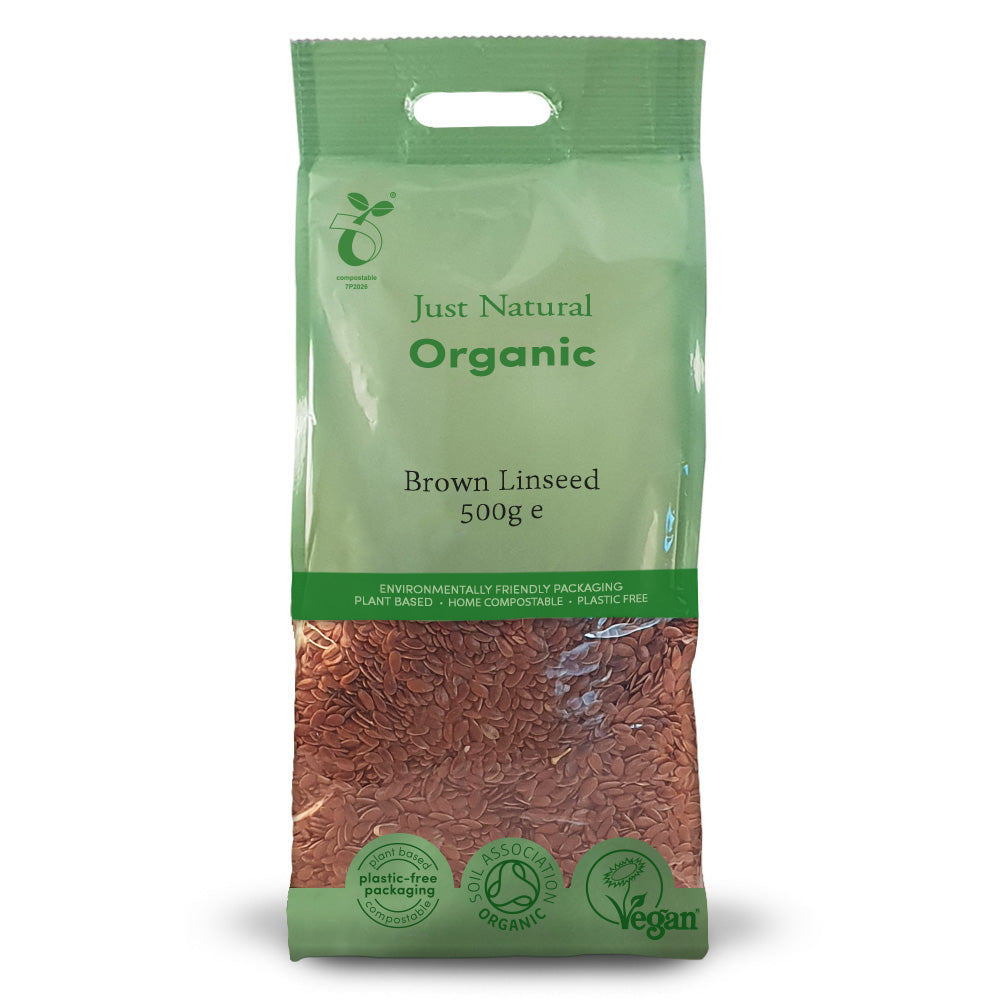
Organic Brown Linseed 250g/500g/1000g
Organic Brown Linseed 250g/500g/1000g


Couldn't load pickup availability
Brown linseeds (brown flaxseeds) have a more robust, earthy flavour than their golden counterparts and an identical nutritional profile — one of the richest plant sources of omega-3 fatty acids (ALA) at around 23g per 100g, alongside exceptional dietary fibre (27g per 100g), and lignans — the most concentrated food source of these antioxidant phytoestrogens, associated with hormonal balance, cardiovascular health, and cancer-protective properties.
Brown linseeds are the traditional British variety and are particularly valued for their slightly stronger flavour in savoury baking, bread, and porridge. Like all linseeds, they must be ground for full nutritional absorption.
Certified organic by the Soil Association. Plastic-free, home-compostable packaging.
vailable in 250g, 500g and 1000g.
Grind and stir into porridge, smoothies, or yoghurt. Add whole to bread, muffins, or flapjacks. Use as an egg substitute in baking. Mix into overnight oats. Scatter over cereal. Blend into seed mixes and energy balls. A daily spoonful of ground linseed in warm water supports digestive regularity.
Recipe idea — Linseed & Oat Bread: Combine 300g wholemeal flour, 100g rolled oats, 50g whole brown linseeds, 1 tsp baking powder, ½ tsp bicarbonate of soda, and a pinch of salt. Stir in 300ml buttermilk (or plant milk + 1 tsp lemon juice). Shape into a round loaf, score the top, and bake at 200°C for 35–40 minutes. Dense, nutty, and naturally rich in omega-3 and fibre.
| Nutritional Values per 100g | |
|---|---|
| Energy | 2234 kJ / 534 kcal |
| Fat | 42g |
| Of Which Saturates | 3.7g |
| Carbohydrates | 11g |
| Of Which Sugars | 1.5g |
| Fibre | 27g |
| Protein | 18g |
| Salt | 0.03g |
Key nutrients: Richest plant source of lignans, very high in omega-3 ALA (23g/100g) and dietary fibre (27g/100g), magnesium, thiamine (B1), phosphorus, and manganese.
Ingredients: Organic Brown Linseeds (Flaxseeds).
FAQs
What are lignans and why are they beneficial?
Lignans are polyphenolic compounds found in plant foods. Linseeds contain up to 800 times more lignans than most other plant foods, making them by far the richest dietary source. In the gut, bacteria convert lignans into enterolignans (enterodiol and enterolactone), which act as weak phytoestrogens and antioxidants. Research links dietary lignan intake with cardiovascular health, hormonal balance, and reduced risk of hormone-sensitive cancers.
Must I grind brown linseeds to benefit from them?
Yes — whole linseeds largely pass through the digestive system undigested. Grinding unlocks the ALA, lignans, and protein inside. Grind small batches in a coffee or spice grinder and store in the fridge for up to 2 weeks.
Is brown linseed different to golden linseed nutritionally?
No — the nutritional profiles are virtually identical. Brown linseeds have a slightly stronger, earthier flavour. Golden linseeds are milder and lighter. Choose based on preference and recipe requirements rather than nutrition.
How much linseed should I eat daily?
1–2 tablespoons (10–20g) of ground linseed per day is the commonly recommended amount. Always drink plenty of water alongside, as the high fibre content requires adequate hydration to work effectively.
Are linseeds suitable during pregnancy?
Due to their lignan and phytoestrogen content, pregnant women are sometimes advised to consume linseeds in moderation. Consult a healthcare professional if you are pregnant or breastfeeding.