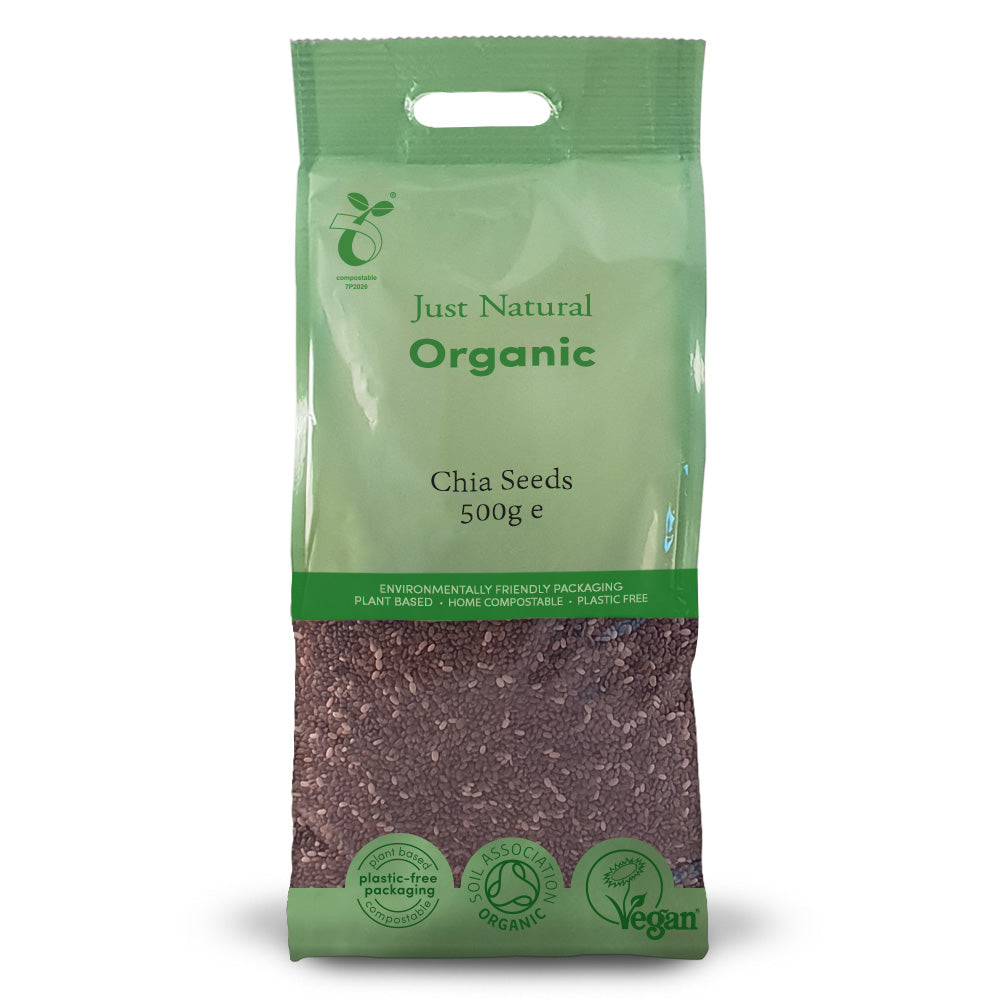
Organic Chia Seeds 250g/500g
Organic Chia Seeds 250g/500g


Couldn't load pickup availability
Chia seeds have earned their superfood status with good reason — these tiny seeds from Just Natural Organic pack one of the most complete nutritional profiles of any plant food.
Each 100g provides an extraordinary 34g of dietary fibre (the highest of any seed), 23g of omega-3 fatty acids (as ALA), 631mg of calcium (equivalent to nearly two glasses of milk), 335mg of magnesium, and 16g of complete plant protein containing all essential amino acids.
They are also uniquely hydrophilic — absorbing up to 12 times their weight in liquid to form a gel — which makes them invaluable as an egg replacer in baking and as the base of chia puddings.
Certified organic by the Soil Association. Plastic-free, home-compostable packaging.
Available in 250g and 500g.
Add a tablespoon to overnight oats, smoothies, or porridge. Stir into yoghurt and leave for 10 minutes. Make chia pudding by soaking in plant milk overnight. Use as an egg substitute in baking (1 tbsp chia + 3 tbsp water = 1 egg). Sprinkle over salads or stir into energy balls.
Recipe idea — Chocolate Chia Pudding: Mix 3 tbsp chia seeds with 250ml oat milk, 1 tbsp raw cacao powder, and 1 tsp maple syrup. Stir well, refrigerate overnight. Top with fresh berries and a drizzle of almond butter. Ready in 5 minutes of prep, with zero cooking required — and packed with omega-3s, fibre, calcium, and magnesium.
| Nutritional Values per 100g | |
|---|---|
| Energy | 2031 kJ / 486 kcal |
| Fat | 30.7g |
| Of Which Saturates | 3.3g |
| Carbohydrates | 42.1g |
| Of Which Sugars | 0g |
| Fibre | 34.4g |
| Protein | 16.5g |
| Salt | 0.02g |
Key nutrients: Outstanding source of omega-3 (ALA) at 23g/100g, dietary fibre (34g/100g), calcium (631mg/100g — 79% NRV), magnesium (335mg/100g — 89% NRV), iron, zinc, manganese, phosphorus, and B vitamins including thiamine and niacin.
Ingredients: Organic Chia Seeds.
FAQs
How do chia seeds absorb liquid?
Chia seeds are uniquely hydrophilic, meaning they readily absorb water. They contain soluble fibre (primarily mucilage) that swells into a gel-like coating when wet. This is what makes chia pudding possible — and it's also why they're so useful as a binder in egg-free baking. The gel formation slows digestion, supporting sustained energy and satiety.
How can I use chia seeds as an egg substitute?
Mix 1 tablespoon of chia seeds with 3 tablespoons of water. Leave for 5–10 minutes until a gel forms. This "chia egg" works well in muffins, banana bread, pancakes, and flapjacks. It doesn't add flavour, holds the mixture together, and adds a nutritional boost in the process.
Are chia seeds a good source of omega-3?
Yes — chia seeds are one of the richest plant sources of ALA (alpha-linolenic acid), a type of omega-3 fatty acid. However, ALA must be converted in the body to EPA and DHA (the forms found in fish oil) for maximum benefit, and this conversion rate is limited. They are an excellent dietary omega-3 source for vegans and vegetarians.
Do chia seeds need to be ground to absorb nutrients?
Unlike flaxseeds, chia seeds do not need to be ground — their seeds have a much thinner, more digestible outer coating, meaning whole chia seeds are well-absorbed by the digestive system.
Are these gluten-free?
Yes — chia seeds are naturally gluten-free. Packed in a facility that handles gluten-containing grains, so check the label if you have coeliac disease.