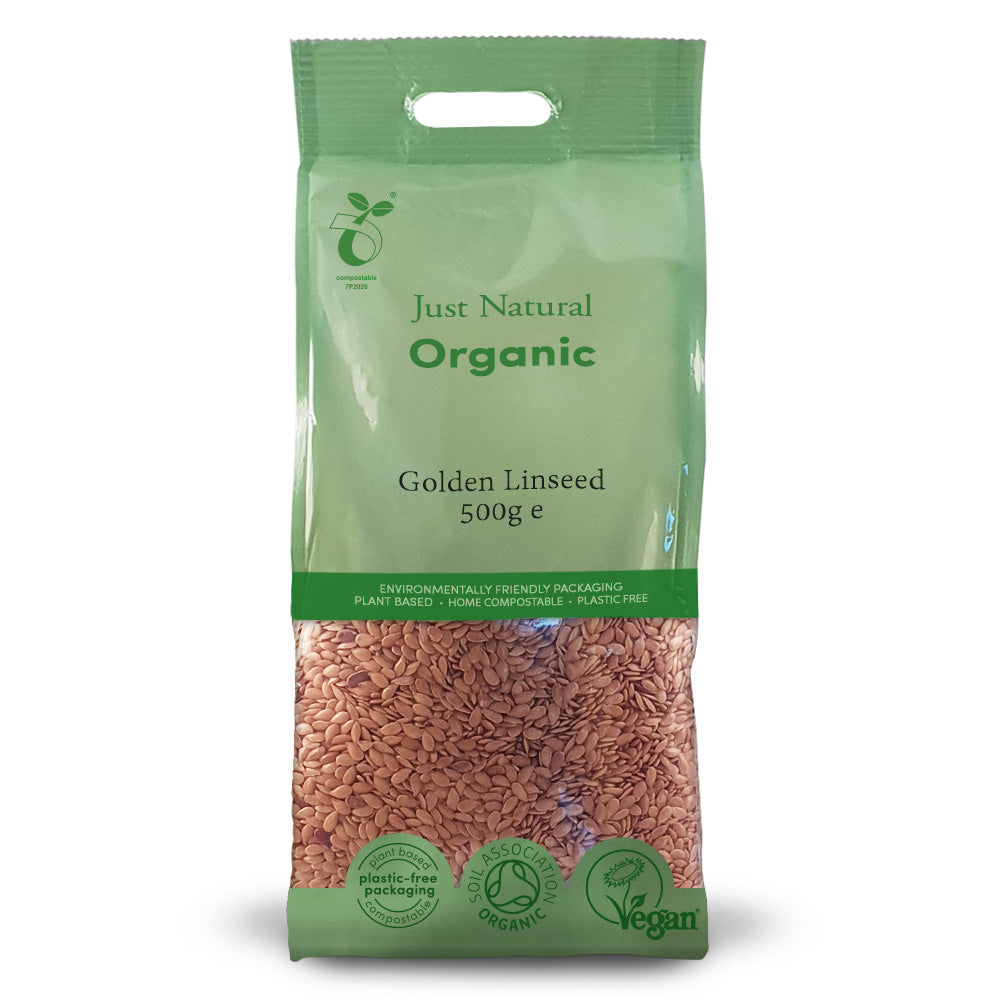
Organic Golden Linseed 250g/500g/1000g
Organic Golden Linseed 250g/500g/1000g


Couldn't load pickup availability
Golden linseeds (also called golden flaxseeds) have a milder, nuttier flavour than their brown counterparts — slightly sweeter and less earthy — making them the preferred choice for those new to linseeds or for recipes where a more delicate flavour is desired.
Like all linseeds, they are one of the richest plant sources of omega-3 fatty acids (ALA), with around 23g per 100g. They are also packed with lignans — phytoestrogens with antioxidant properties — and provide outstanding dietary fibre (around 27g per 100g) to support digestive health and regularity.
For maximum nutritional benefit, grind before use; whole seeds pass through the digestive system largely intact.
Certified organic by the Soil Association. Plastic-free, home-compostable packaging.
Available in 250g, 500g and 1000g.
Grind in a coffee or spice grinder and stir into porridge, yoghurt, or smoothies. Add whole to bread dough or muffin batter. Use as an egg substitute (1 tbsp ground linseed + 3 tbsp water). Mix into overnight oats or sprinkle over salads. Blend into homemade energy balls.
Recipe idea — Golden Linseed Crackers: Mix 150g whole golden linseeds with 50ml water and a pinch of salt. Leave for 15 minutes — the seeds will absorb the water and form a cohesive dough. Spread thinly onto a lined baking sheet and bake at 160°C for 35–40 minutes until crisp. Break into shards. Naturally gluten-free, high in fibre and omega-3.
| Nutritional Values per 100g | |
|---|---|
| Energy | 2234 kJ / 534 kcal |
| Fat | 42g |
| Of Which Saturates | 3.7g |
| Carbohydrates | 11g |
| Of Which Sugars | 1.5g |
| Fibre | 27g |
| Protein | 18g |
| Salt | 0.03g |
Key nutrients: Richest plant source of omega-3 ALA (23g/100g), very high in dietary fibre (27g/100g), lignans (the richest food source), magnesium, thiamine (B1), phosphorus, and manganese.
Ingredients: Organic Golden Linseeds (Flaxseeds).
FAQs
Do I need to grind linseeds to get their benefits?
Yes — for maximum nutritional benefit, grind linseeds before eating. Whole seeds often pass through the digestive tract undigested, meaning the nutrients inside (especially ALA and lignans) are not fully absorbed. A coffee or spice grinder works perfectly. Grind in small batches and store in the fridge to prevent the oils turning rancid.
What is the difference between golden and brown linseeds?
Both offer virtually identical nutritional profiles. Golden linseeds have a lighter colour, milder flavour, and slightly softer texture, making them preferable for smoothies, yoghurts, and baking where appearance matters. Brown linseeds have a stronger, earthier flavour. Nutritionally, they are interchangeable.
How do linseeds support digestive health?
Linseeds are exceptionally high in both soluble and insoluble fibre. The soluble mucilage forms a gel in the gut that softens stool and supports regular bowel movements. They are one of the most effective whole-food options for maintaining digestive regularity when consumed with adequate water.
Are linseeds the same as flaxseeds?
Yes — linseed and flaxseed are the same thing. "Linseed" is the British English term; "flaxseed" is more commonly used in North America. Both refer to the seeds of Linum usitatissimum.
Are these suitable for people with gluten intolerance?
Yes — linseeds are naturally gluten-free. They are packed in a facility handling gluten-containing grains, so check the label if you have coeliac disease.