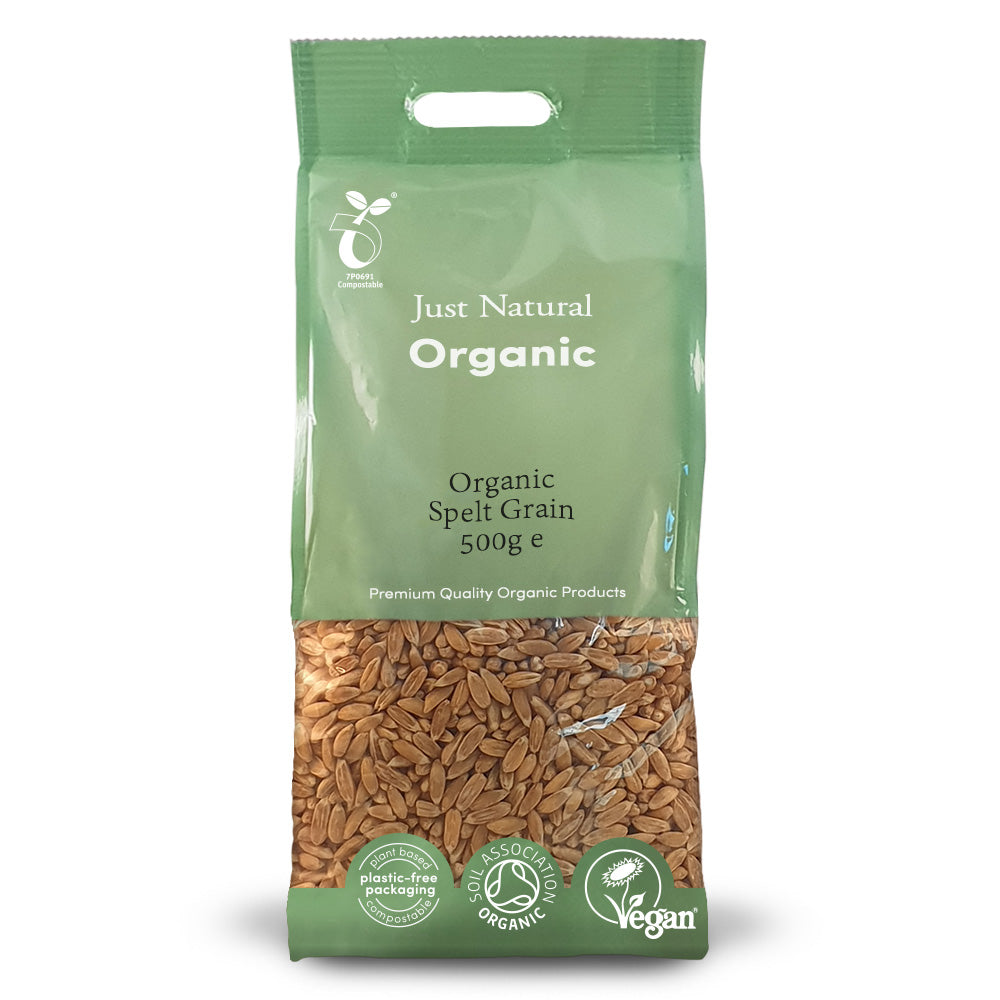
Organic Spelt Grain 500g
Organic Spelt Grain 500g


Couldn't load pickup availability
Spelt is an ancient grain cultivated for over 7,000 years — a hulled wheat variety with a distinctive nutty, slightly sweet flavour and a looser gluten structure than modern wheat that many people with wheat sensitivity (not coeliac disease) find easier to digest. These certified organic spelt grain from Just Natural Organic are whole spelt berries — the complete grain with bran, germ, and endosperm intact — providing the full spectrum of spelt's nutritional value.
Rich in protein, manganese, phosphorus, magnesium, niacin (B3), and dietary fibre. Higher protein than modern wheat. Contains gluten.
Certified organic by the Soil Association. Plastic-free, home-compostable packaging. Available in 500g.
Soak overnight and cook 40–50 minutes in a 1:3 ratio. Use in grain bowls, salads, soups, and as a rice substitute. Excellent in warm spelt salads with roasted vegetables and feta. Use in grain-based stuffings.
Recipe idea — Warm Spelt & Roasted Squash Salad: Cook 200g spelt grain (soaked overnight) for 40 minutes. Roast 1 butternut squash (cubed) at 200°C for 30 minutes with olive oil and sage. Combine warm spelt with squash, 80g crumbled feta, toasted walnuts, rocket, and a dressing of lemon juice, olive oil, and honey. The nutty spelt pairs beautifully with sweet squash and salty feta.
| Nutritional Values per 100g (dry) | |
|---|---|
| Energy | 1469 kJ / 349 kcal |
| Fat | 2.4g |
| Of Which Saturates | 0.4g |
| Carbohydrates | 70g |
| Of Which Sugars | 0g |
| Fibre | 10g |
| Protein | 15g |
| Salt | 0g |
Ingredients: Organic Spelt Grain.
FAQs
Is spelt gluten-free?
No — spelt contains gluten and is not suitable for coeliac disease. However, spelt's gluten structure is looser and more fragile than modern wheat, which some people with non-coeliac wheat sensitivity find more tolerable. Always consult a healthcare professional if you have gluten-related health issues.
Is spelt more nutritious than modern wheat?
Spelt typically has slightly higher protein content than common wheat (around 15g vs 12g per 100g) and retains its nutritional profile even in the hulled whole grain form. It also provides a different flavour profile — nuttier and more complex than modern wheat.